

Fuente Opus X Lost City: The Story Behind the Legendary Dominican Puro
The Fuente Opus X Lost City is one of the rarest, most story-rich cigars the Fuente family makes. I'm Gerard from Mardo Cigars, and I'll explain what the Fuente Opus X Lost City is: the story behind it, how it differs from regular Opus X, its flavor, the sizes, why it's so hard to find, and how to store it. It's a special-occasion smoke worth knowing.

QUICK ANSWER
- A rare, refined version of Opus X, introduced in 2004.
- Grown on preserved Chateau de la Fuente farmland Carlos Fuente Jr. saved.
- More balanced and aged than regular Opus X; medium-full to full.
- Extremely limited, one of the rarest Fuente releases.
What Is Fuente Opus X Lost City?
The Fuente Opus X Lost City is one of the most sought-after cigars in the whole Opus X family. It came out in 2004. It's not just a line extension, it's a tribute to a piece of land that almost disappeared. It's made only at Arturo Fuente's Chateau de la Fuente estate, using tobacco from a specific part of the farm. Carlos Fuente Jr. fought to save that land, and the leaf grown there became the base for what many call the most refined Opus X of all.
The Lost City Origin Story
In the late 1990s, part of the Chateau de la Fuente property was going to be sold for development. But that land grew some of the estate's finest wrapper leaf, the same rare Dominican wrapper that made Opus X revolutionary in 1995. Carlos Fuente Jr. knew that losing it meant losing an irreplaceable terroir. So he preserved it. The tobacco from those fields became "Lost City" leaf, a name that honors what almost vanished. The cigars are more nuanced and refined than standard Opus X, with extra aging and careful selection.
How Lost City Differs from Regular Opus X
All Opus X cigars use the legendary Chateau de la Fuente wrapper. Lost City just takes it further. Think of it as the reserve bottling of an already premium line:
- Tobacco: only from the preserved Lost City fields.
- Aging: longer than standard Opus X, for smoother, more integrated flavor.
- Profile: more balanced and less aggressive than the original.
- Volume: even more limited, so it's exceptionally rare.
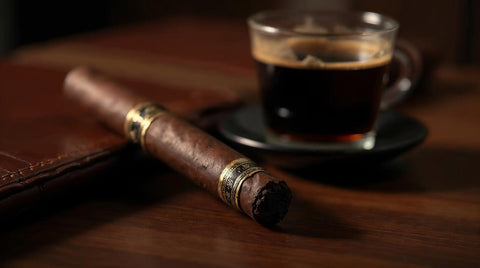
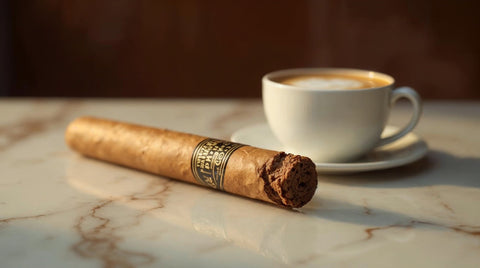
- Look: a special Lost City band next to the classic Opus X band.
Flavor Profile
Lost City is complex but smooth. You get layers of aged cedar, leather, and earth. On top, there's sweet spice, roasted coffee, and a touch of dried fruit. The extra aging adds a creaminess that softens the edges without dulling the complexity. The strength lands medium-full to full, but the aging makes it feel smoother than a young Opus X. Each third reveals something new, so take your time.
Sizes to Look For
- Robusto (5 × 50) — the most accessible format when you can find it.
- Toro (6 × 54) — more room for the blend to develop.
- Double Corona (7.5 × 49) — a long, contemplative smoke.
- Torpedo (6⅛ × 52) — the tapered head shows off the wrapper's sweetness.
Why It's So Rare, and How to Find It
Even regular Opus X is limited by the tricky-to-grow Dominican wrapper. Lost City narrows the source to specific fields and ages the tobacco longer, so there's simply less of it. Releases are event-driven and tied to special occasions, and they sell out fast. Your best bet is a shop with regular Fuente allocations that can tell you when it lands. At Mardo Cigars we secure rare Fuente releases when we can, check our Opus X collection and reach out if you're hunting something specific.
Who It's For (and Storing It)
The Fuente Opus X Lost City is for the enthusiast who loves the story as much as the smoke. If you already know Opus X and want its most refined form, this is the next step. It's a milestone cigar, one to save for a big celebration. Store it at 65–70% humidity and 65–70°F. It arrives well-aged and ready to smoke, but many collectors rest it a few more years to integrate the flavors even further. New to storage? See our guide on how to store cigars.
Is Lost City Worth Hunting For?
If you love the story as much as the smoke, yes. Lost City is more than a cigar. It's a piece of preserved history in every puff. The refined, aged profile makes it one of the smoothest ways to experience Opus X tobacco. For a milestone, or a gift to a true aficionado, it's a special choice. Just be patient. Finding one takes timing and a good relationship with your shop.
Explore Opus X and Arturo Fuente
 Mardo Cigars2024 Limited Edition Opus X Rare Black Cabinet HumidorView
 Arturo Fuente CigarsArturo Fuente 2021 Unnamed ReserveView
When you smoke a Lost City, you're tasting tobacco from fields that almost disappeared, made by a family that has spent generations perfecting its craft. The best cigars aren't just products. They're stories told through leaf and time, preserved for those who seek them out.
Share