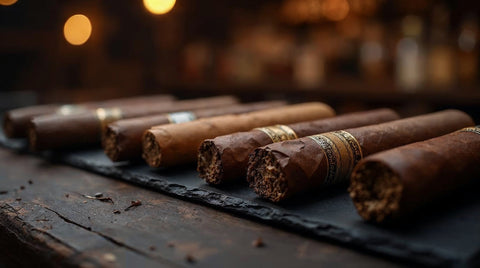


Cigar Shapes and Sizes: A Vitola Chart and How Size Changes Flavor
Quick answer
- Vitola means a cigar's size and shape: length in inches x ring gauge in 64ths of an inch.
- Cigar shapes come in two families: parejos (straight sides, round or box-pressed) and figurados (shaped, like the belicoso, torpedo and perfecto).
- Robusto (about 5 x 50) and toro (about 6 x 52) sell the most; if you're new, start with a robusto.
- The same blend tastes different in each size: thin cigars lean on the wrapper, thick ones on the filler.
- Thin cigars burn faster and hotter; a 6 x 60 gordo can last close to two hours.
I'm Gerard from Mardo Cigars. People ask me all the time: if two cigars share the same blend, does the size really matter? It does. Here are the cigar shapes and sizes you'll find in any humidor, their typical measurements, what each does to the flavor, and how to pick yours.
What is a vitola? How cigar sizes are measured
Vitola is the Spanish word the cigar trade uses for a cigar's format: its length, ring gauge and shape. Length is in inches. Ring gauge is the diameter in 64ths of an inch, so a 64 ring would be an inch across.
Sizes are written length first: a 6 x 52 toro is six inches long with a 52 ring, just over three quarters of an inch thick. Here's more on what ring gauge is and why it matters.

Parejos vs figurados: the two families of cigar shapes
Most cigars are parejos: straight sides, a rounded cap and an open foot. The round parejo is the most common of all cigar shapes. Next comes the box press, a parejo pressed into a squarer profile (see our guide to box-pressed cigars).
Figurados have a shaped profile. The ones you'll meet most:
- Belicoso: a short taper at the head. Brands often give it a different ring gauge from their toro, and it rests on your lips differently.
- Torpedo: a longer, pointed taper at the head. Cut it with a guillotine or a V-cutter, not a punch.
- Perfecto: tapered at both ends, with a closed foot. Many are close to a robusto in size.

Shaped cigars usually cost more. A perfecto runs more than a robusto of about the same size, because it takes a master torcedor, a very experienced roller, to make one. And with that taper, you can't smoke it down to the nub. So I sometimes pass on a perfecto, unless the blend tastes best in that shape.
Some brands also sell a larger shape simply called a figurado. When it costs only a dollar or two more than their perfecto, I take the figurado: there's a lot more cigar there.
Three cigar shapes to try: a box press, a belicoso and a perfecto
 Noel RojasNoel Rojas Street Tacos Mictlan LE 2026View
 Black Label TradingBlack Works Studio Shaolin 36th Chamber Limited EditionView
 King's BloodKing's Blood Blood Drop PerfectoView
Cigar shapes and sizes chart
Sizes vary from brand to brand, so read these as typical figures, not rules.
Common cigar shapes and sizes (vitolas)
| Vitola | Typical size | Family | What to expect |
|---|---|---|---|
| Lancero | 7–7 1/2 x 38–40 | Parejo | The most wrapper flavor; burns hotter |
| Lonsdale | 6 1/2 x 42–44 | Parejo | Long and slim; plenty of wrapper flavor |
| Corona | 5 3/4–6 1/4 x 44–46 | Parejo | A quick, intense burn |
| Robusto | About 5 x 50 | Parejo | Balanced; the go-to first pick |
| Toro | 5 3/4–6 1/2 x 50–54 | Parejo | The best seller; good wrapper-to-filler balance |
| Churchill | About 7 x 48 | Parejo | A long, slow smoke |
| Gordo | About 6 x 60 | Parejo | More filler flavor; close to two hours |
| Belicoso | Often 6 x 52 | Figurado | Short taper; rests differently on the lips |
| Torpedo | Often 6 x 52 | Figurado | Long, pointed head; no punch |
| Perfecto | Varies, often near robusto size | Figurado | Tapered at both ends; can't be smoked to the nub |
Robusto and toro: the most popular cigar sizes
Ask any manufacturer in the United States which sizes sell best and the answer is the same: robusto and toro.
The toro, usually 6 x 52 or 6 x 54, has a good balance of wrapper, binder and filler, which is why so much of the industry goes for it. The robusto, about 5 x 50, sits right between a skinny lancero and a fat gordo.

A few lines break the pattern. The Cuban Hoyo de Monterrey Double Corona has always been a collectors' favorite, and the tapered Montecristo No. 2 is one of the most famous Cuban cigars. And my own favorite isn't a robusto or a toro: it's a lonsdale-type size.
How size changes the flavor of the same blend
Every cigar has three parts: the filler, the binder that holds it together and the wrapper outside. I put the wrapper at about 40% of a cigar's flavor. Change the size and you change the ratio between them, so the same blend tastes different.
- Thin (lancero, corona): more wrapper for the amount of filler, so the wrapper leads. These burn hotter, because the heat stays trapped inside, and smoke faster.
- Middle (robusto, toro): the balance point, closest to what the blend should taste like.
- Thick (gordo, 60 ring and up): much more filler for the amount of wrapper, so the filler takes over. More surface area lets in more air, so it burns cooler.
An 8 x 80 JFR Lunatic and the same blend at 4 3/4 x 70 taste far apart, as you'd expect. But small steps count too: one leaf more or less can change the flavor. I've compared the Jake Wyatt Herbert Spencer as a 6 x 52 belicoso and a 6 x 54 toro, and they taste very different.

A true lancero is a 38 ring gauge. Many makers now roll them at 40 because the ash holds better; at 38 it tends to flake. The wrapper is the priciest leaf in a cigar, and a lancero gives you the most of it. More in our guide to lanceros and gordos.
To taste it yourself, compare two sizes of the same line. We carry Caldwell's The Queen Is Dead from a 7 3/4 x 40 lancero to a 6 x 60 gordo, all with the same Habano 2000 wrapper.
One line, four sizes: The Queen Is Dead
 Caldwell Cigar Co.The Queen Is Dead Bloodroot by Caldwell Cigar Co. 7.75 x 40View
 Caldwell Cigar Co.The Queen Is Dead Requiem by Caldwell Cigar Co. 5 x 50View
 Caldwell Cigar Co.The Queen Is Dead Crimson Veil by Caldwell Cigar Co. 6 x 52View
 Caldwell Cigar Co.The Queen Is Dead Revenant by Caldwell Cigar Co. 6 x 60View
How to choose the right cigar size
New to cigars, or trying a blend for the first time? Start with a robusto. It sits right in the middle and shows you what the blend should taste like. Browse our robusto cigars.

Then pick by what you want from the smoke:
- Want the wrapper's flavor? Go thinner: a corona, lonsdale or lancero.
- Short on time? Try a corona: the smaller ring gauge burns faster.
- Want the most cigar for your money? A 6 x 60. Many brands price it like their toro, and it lasts close to two hours.
- A huge ring gauge? Some cigars go up to an 80 ring. Not my preference, but if you smoke one, use a punch rather than a guillotine: a straight cut that wide is hard to seal with your lips.
- Exotic cigar shapes from a new brand? Be careful: shaped cigars need experienced rollers, and a new company may not have them yet.
Mardo Cigars sells premium tobacco products intended for adults 21 and older. Please enjoy responsibly.
- #beginner cigars
- #beginners guide how to smoke your first cigar
- #best beginner cigars
- #best cigar videos online
- #best cigars
- #cigar (industry)
- #cigar 101
- #cigar advisor
- #cigar aficionado
- #cigar company
- #cigar obsession
- #cigar review
- #cigar reviews
- #cigar sizes
- #cigar smoking
- #cigar store
- #cigar videos
- #cigar vitola
- #cigars
- #cigars 101
- #cigars beginners
- #cigars daily
- #cigars for beginners
- #cigars for dummies
- #cuban cigars
- #how to cigars
- #how to smoke a cigar
- #how to taste a cigar
- #smoking a cigar
- #smoking cigars
Share